Free Template
Move-In / Move-Out Inspection Checklist
The checklist and process that protects security deposits and settles disputes before they ever start.
No credit card required. 14-day free trial.
The move-in inspection is your baseline. The move-out inspection is your proof. When both are documented the same way, with photos and a signature, deciding what comes out of a deposit stops being an argument and starts being a comparison.
Use the checklist below at move-in to record the unit's exact condition, then run it again at move-out and compare. Anything beyond normal wear and tear is your basis for a fair, defensible deduction.
Run the same items at both ends of the tenancy, and photograph everything.
Photograph everything at move-in. The photos you take on day one are what settle arguments on the last day. Capture every room, even the parts that look perfect, so you have a baseline to compare against.
Get the signature. When the tenant signs the move-in report, they are agreeing to the unit's condition before they ever unpacked. That signature ends most disputes before they begin.
Compare side by side. The move-out inspection only matters next to the move-in. Line them up, mark what changed beyond normal wear, and you have a clean basis for every deduction.
Know your deadline. Most states set a strict window to return a deposit or send an itemized statement, often 14 to 30 days. Miss it and you can forfeit your right to deduct at all, so check your local rule.
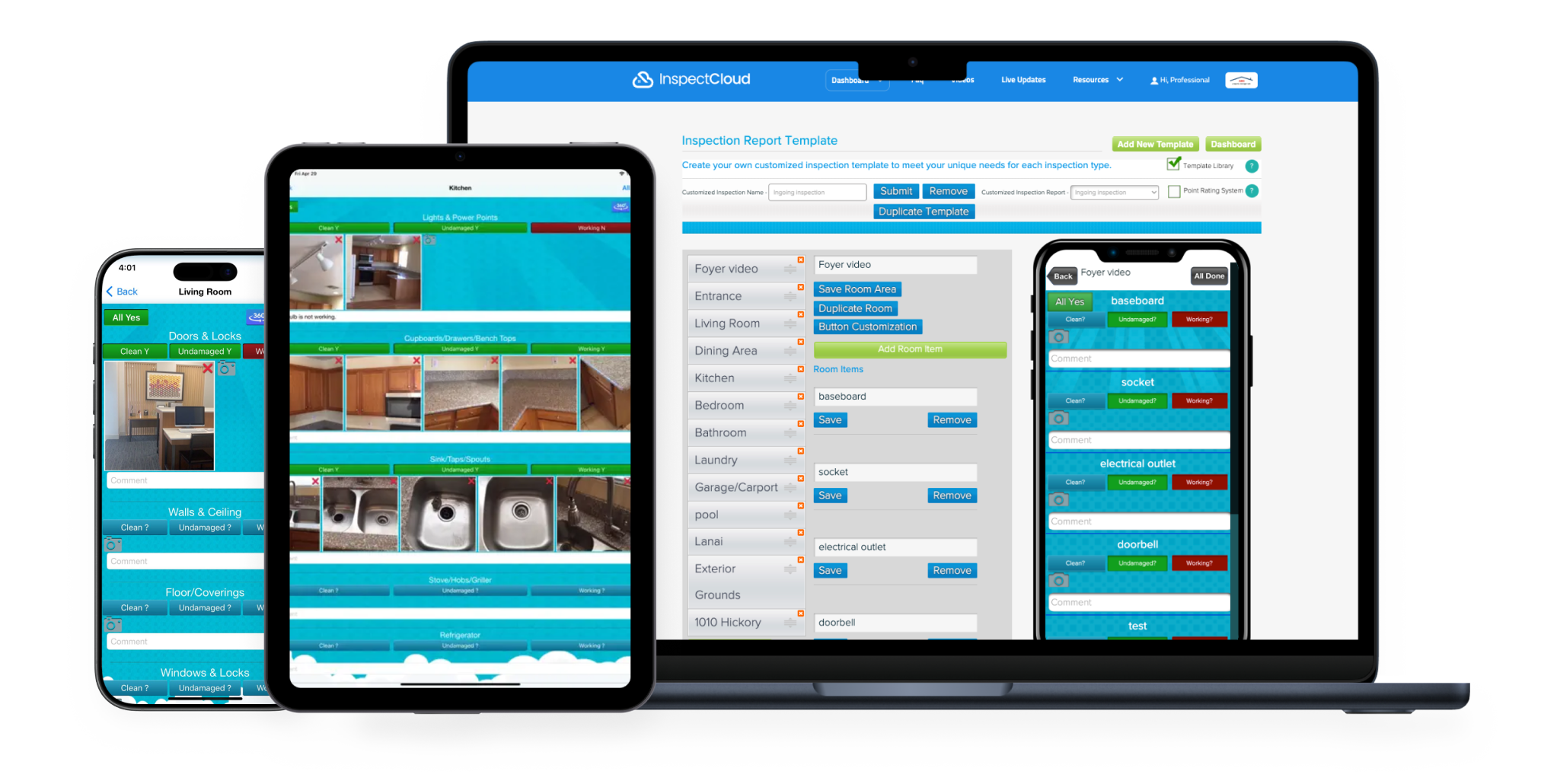
InspectCloud runs this exact checklist on any phone or tablet and does the tedious parts for you.
Check a box, snap a photo, capture a signature. Everything drops into a clean, branded PDF report automatically.
Pick two inspections and the software highlights every difference in a side-by-side comparison. What used to take 20 to 30 minutes per unit takes about three seconds.
Resident Inspection lets tenants complete their own move-in inspection on their phone, so the documentation exists before a dispute ever comes up. It is included with every plan.
Room-by-room checklist for move-in, move-out, and routine rental inspections.
A full checklist for office, retail, and industrial property inspections.
The full guide and checklists for every property type.
A move-in inspection records the unit's condition before the tenant takes possession and becomes your baseline. A move-out inspection documents the condition when they leave. The comparison between the two, beyond normal wear and tear, determines any fair deposit deductions.
It depends on your state, but most set a window of 14 to 30 days to return the deposit or send an itemized statement of deductions. Check your local landlord-tenant law, because missing the deadline can cost you the right to deduct.
Normal wear is the gradual, expected aging of a unit from ordinary use, like faded paint, minor scuffs, or lightly worn carpet. Damage is beyond that, like large holes, stains, burns, or broken fixtures. Dated move-in photos are what prove the difference.
Yes. A checklist says something was damaged, but a dated photo shows exactly what and how much. Photos of every room at move-in are the single best protection you have in a deposit dispute.
Yes. InspectCloud runs both on any phone, captures photos and signatures, and generates a side-by-side comparison report automatically, so you can settle a deposit in minutes instead of an afternoon.
Try InspectCloud free. Document move-in and move-out on your phone, and let the side-by-side comparison do the hard part.